

What is Truck Drive Shaft
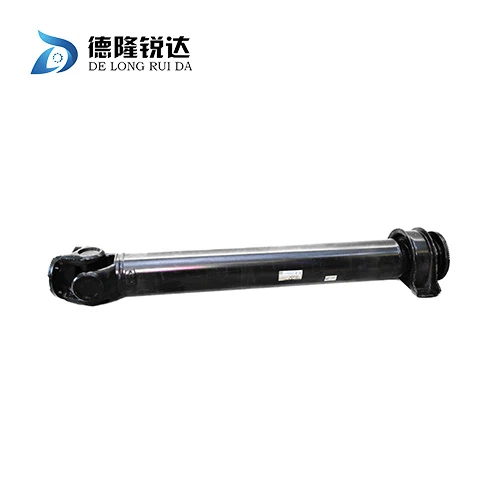
Truck drive shaft is a component of a truck's drivetrain that transfers torque and rotational energy from the transmission to the rear axle. The drive shaft is a metal shaft that is designed to withstand high torque and rotational forces, and it connects the transmission output shaft to the rear differential input shaft. The drive shaft must be carefully balanced and securely mounted to ensure smooth and reliable operation, and it is often composed of several sections that are connected by universal joints to accommodate the movement of the suspension.
Advantages of Truck Drive Shaft
Increased torque:The Drive Shaft is responsible for transferring the torque from the engine to the rear wheels. It can provide more torque to the rear wheels than other types of transmission systems, making it ideal for heavy-duty vehicles like trucks.
Better fuel efficiency:The Drive Shaft is more fuel-efficient than other types of transmission systems. As it transports power from the engine to the wheels, the truck's engine can operate at a more efficient speed, leading to better fuel economy.
Easier maintenance:Drive Shaft is an easy-to-maintain system, which means that truck owners don't have to spend much time and money on its upkeep. Maintenance usually involves greasing the joints and replacing components that have worn out due to regular use.
Improved performance:Drive Shaft can enhance a truck's performance by providing the necessary torque for towing heavy loads. It enables the vehicle to start and accelerate smoothly, providing the power required for better performance.




Why Choose Us
24H online service
You can contact us to inquire about pre-sales, sales, and after-sales services, and we will give you a very satisfactoryWe are at your service online 24 hours a day.
Rich experience
Dedicated to strict quality control and attentive customer service, our experienced staff is always available to discuss your requirements and ensure complete customer satisfaction.
High quality
Our products are manufactured or executed to very high standards, using the finest materials and manufacturing processes.
One-stop solution
With rich experience and one-to-one service,we can help you choose products and answer technical questions.
The main purpose of atransmission shaft is to transmit torque from the engine of the differential or transmission to the wheels of the vehicle. In addition, any variation in angle or length caused by manipulation or misalignment must be compensated for to ensure excellent synchronization between shaft joints.
The fron ruck drive shaft has a connecting shaft, an internal constant-speed joint, and an external stationary joint. It also has other components such as torsion dampers and anti-lock system rings. Vehicles equipped with a flexible bearing or bracket are used to connect the transmission and the engine. However, the suspension springs play the role of connecting the wheels, differential, and rear axle.
The drive shaft and the rear axle box output shaft are in several planes. This arrangement allows the drive shaft to connect the input and output shafts at an angle. When the rear wheel hits an uneven surface, the rear axle moves up and down, expanding and compressing the suspension spring. This changes the angle between the post shaft and the drive output shaft.
Due to this process, the length of the post shaft changes. This change occurs because the drive shaft and rear axle rotate in an arc with a point on their axis of rotation.
Types of Truck Drive Shaft
One-piece drive shaft
One-piece drive shaft is composed of a single long tube that connects the transmission directly with the axle. It is the simplest form of drive shaft used in heavy-duty trucks. They are commonly found in trucks that have a short wheelbase and do not have a lot of torque.
Two-piece drive shaft
Two-piece drive shaft is composed of two sections, and each section is supported by a carrier bearing. The carrier bearing allows the two sections of the shaft to flex and absorb shock. Two-piece drive shafts are commonly found in long-wheelbase vehicles, as they provide more flexibility and durability.


Three-piece drive shaft
Three-piece drive shaft is composed of three sections and is the most flexible and durable drive shaft available. The three separate pieces allow the drive shaft to flex and absorb shock even better than the two-piece versions. They are ideal for heavy-duty trucks that need to handle rough terrain or large loads.
Front-wheel drive (FWD)
Front-wheel Drive (FWD) is a type of vehicle configuration in which the engine power is transmitted to the front wheels of the truck. This type of configuration is commonly found in passenger cars and smaller trucks, where it offers better fuel efficiency and better traction on slippery roads. FWD trucks typically have a more compact engine bay and lighter weight than their rear-wheel drive counterparts, which makes them more maneuverable and agile in tight spaces.
Parts of Truck Drive Shaft


Tube yoke and slip yoke
By means of a universal joint, the slip yoke is directly connected to the truck drive shaft. Power is delivered by this yoke sliding inward and outward within the transfer case. It is also necessary for the driveshaft and the U-joint to be rotated successfully if a tube yoke is used.
Tube
Vehicles with rear engines and front engines have tubes as well. During braking or acceleration, it is used to keep the rear end's position or placement
Center bearing
Truck drive shaft is linked together by the center bearing. By doing so, the center bearing ensures that the drive shaft parts are precisely positioned and reduces harmonic vibrations.
Flanges
Propeller shafts are connected to differentials, transmissions, and transfer cases by the propeller flange. In addition to being used to link propeller shafts with hydraulic pumps, power take-offs, and many other parts of the vehicle, these also connect hydraulic pumps to propeller shafts.
End yoke
Using the end yoke, the prop shaft is maintained in a durable and accurate way. During vehicle acceleration, the end yoke is intended to reduce vibrations and noises. As a result, the driving experience is made more comfortable.
Universal joint or U-joint
Among the most important parts of the propeller shaft is the universal joint. Universal joints also be called U-joints. An integral part of the vehicle that connects its revolving shafts.Most vehicles with four-wheel drive or rear-wheel drive are equipped with drive shafts with universal joints.
Midshift shaft
Linked to the housing on the center bearings, it is a major component of the drive shaft and coupling shaft.
Tubular shaft
The purpose of this shaft is to correct the distance factor between the rear axle and the gearbox. It is possible for a drive shaft to have more than one tubular shaft depending on the type of drive shaft and the type of vehicle.Depending on the distance between the shaft and the gearbox, this shaft varies in length. For front-wheel drive, a short tubular shaft is used, and for rear-wheel drive, a long tubular shaft is used.
It is difficult to control your vehicle when your drive shaft is damaged or failing. Check out the following signs and symptoms to look for. Mechanics will be able to diagnose and fix your drive shaft problems if your truck exhibits any of these symptoms.
Experiencing intense shaking and vibrations from under a vehicle is a common symptom of a failing drive shaft. Truck drive shaft vibration is caused by worn out universal joints (U-joints) or bushings. For drive shafts not to vibrate during installation, they are finely balanced before the installation. There is a problem if there is any kind of vibration. When a drive shaft vibrates excessively, passengers will not only feel vibrations, but other drivetrain components will also experience accelerated wear.
As a result of a problem, the drive shaft may also make abnormal noises. Bearings or bushings supporting the drive shaft or U-joints that wear out or fail can cause the drive shaft to be unable to rotate properly. The vehicle may rattle, clunk, scrape, or even squeak under this condition.
Squeaking at low speeds may also be caused by lubricated U-joints. A CV joint that clicks or knocks can be regarded as a faulty one. When the vehicle makes such noises, it should be serviced immediately. There could be other types of different types of sounds such as
Squeaking sounds: You can hear squeaking sounds from your drive shaft because of a couple of issues. In most cases, they do not indicate that the drive shaft has failed, but they do indicate that the bearings or U-joints needs to be lubricated.
Clunking sounds: A loud clunk or knock will be heard from underneath the vehicle. The sound usually indicates a badly worn U-joint needs replacing.
Rattling and scraping sounds: Rattling and scraping noises may also be heard. These sounds indicate that some parts of the drive shaft need lubrication or are worn out. It is important to bring your car in for inspection if you hear any noise in it.
Besides converting torque into movement, the drive shaft also affects how your vehicle turns. You may be experiencing trouble turning when taking a turn because your vehicle's drive shaft is failing.Having a damaged drive shaft limits your control over the car, as well as the wheels' ability to turn properly. It is a serious safety problem that needs to be addressed immediately.
It is much more noticeable to notice the shuddering issue than the vibrations we discussed. When the drive train is defective, you might notice a significant increase in shuddering as you accelerate from a stopped position or increase speed.There are times when a loose U-joint or a worn-out center bearing will result in this problem. Some of the sounds we discussed previously could also accompany it.
How Can You Fix a Damaged Truck Drive Shaft in an Emergency
In order to remove the driveshaft from a truck, you must first remove the front axle. Make sure the front yoke is in good condition. By doing this, you will be able to determine if the rear seal in the transmission needs to be replaced. The bearing cup must first be removed by driving the driveshaft towards one side. After that, you can turn it over and repeat the process if you can.If you have a large cinder block, that will work. In order to install bearing cups into the driveshaft, remove them from the new joint. Attempting to complete the process should be done gradually. Some other ways and steps to fix a broken drive shaft is discussed below:


Hubs need to be cracked: The split pin should be removed from the hub nut while the truck is loaded, and then the hub nut should be cracked off to allow it to fall off. However, do not remove it completely. There will be a big nut to remove, approximately 30mm in diameter, so you will need the proper socket. Besides, they are capable of being torqued to over 250Nm, so it will take a lot of effort to turn them.
Jack up the car: Put the truck on axle stands since you would not be doing anything with it on the ground. Stands are not just for safety reasons here; you also need the wheels to be in the air and ramps are not adequate.
Brakes and Wheels: Remove the wheels, put them under the car for safety, and then apply the brakes. However, the brake line would not need to be disconnected during the removal of the caliper. To avoid weight or tension on the brake hose, suspend the caliper with sturdy cable ties or metal wire.
Check the hubs: Now that the hub nut is freed, you can remove it completely. If possible, it's better to remove the brake disc at this stage – you do not always have to, but it takes just 20 seconds to do so and makes it easier to access the brakes.
Check joints at the lower end: Disconnect the hub assembly and lower arm with a ball joint splitter after undoing the nut on the lower ball joint. The outermost end of the hub should now be free from the drive shaft. There may be times when the anti-roll bar needs to be removed.
Gearbox end: It is either easy to slide out the shaft, or a little gentle persuasion will be required due to the circlip holding it in.
Even though the Drive Shaft Repair process might seem challenging, you can accomplish it successfully. As you get used to it, it takes time to become accustomed to it. The effort, however, can be totally worth it at the end of the day.
How to Maintain Truck Drive Shaft
Regular inspection
Regular inspection of the drive shaft is necessary to prevent any potential issues. Inspect the shaft for any signs of wear or damage that can cause balancing issues or excessive vibrations. Check the U-joints and carrier bearings for any signs of wear or play.
Lubrication
Proper lubrication of the drive shaft is essential to prevent wear and tear. Use a high-quality grease to lubricate the U-joints and carrier bearings. Inspect the lubrication regularly and reapply if necessary.
Alignment
Proper alignment of the drive shaft is crucial to prevent vibration while driving. A misaligned drive shaft can cause wear and tear on other components of the vehicle. Check the alignment regularly and fix any misalignment issues.
Balancing
Balanced drive shaft is essential for the smooth and efficient operation of the vehicle. Check the balance of the drive shaft regularly and rebalance if necessary.
Cleanliness
Keep the drive shaft clean and free of any dirt or debris. Dirt and debris can cause wear and tear on the U-joints and carrier bearings.
Replacement
Replace any worn or damaged drive shaft components immediately. Delaying the replacement can cause further damage and increase the repair costs.
FAQ
Q: What is a drive shaft?
Q: What is the purpose of a drive shaft in a truck?
Q: How long is a typical truck drive shaft?
Q: How often should a truck drive shaft be serviced or replaced?
Q: How do I know if my truck's drive shaft needs to be replaced?
Q: Can a damaged drive shaft cause damage to other parts of the truck?
Q: Are there different types of drive shafts for trucks?
Q: Can a drive shaft be repaired or must it be replaced?
Q: What should I do if I suspect there is a problem with my truck's drive shaft?
Q: What are the common materials used to make truck drive shafts?
Q: Can I replace my truck drive shaft myself?
Q: Do trucks have drive shafts?
Q: Is driveshaft same as transmission?
Q: What is the difference between axle and driveshaft?
Q: Does drive shaft affect performance?
Q: What happens if driveshaft is too long?
Q: What does a driveshaft sound like when bad?
Q: Is a driveshaft the same as a crankshaft?
Q: Is CV shaft and driveshaft the same?
Q: Is a heavier driveshaft better?
Hot Tags: truck drive shaft, China truck drive shaft manufacturers, suppliers, Commercial Truck Steering Knuckles, Heavy Duty Steering Pumps, Steering Drag Link Assembly, Truck Parts Steering Gearbox Assembly, Truck Steering System, Kingpin Pin Repair Kit


