

Truck Steering System
What is Truck Steering System
Truck steering system is a mechanism that allows the driver to control the direction and movement of a truck. It comprises a series of components that work together to convert the driver's steering input into a change in the direction of the wheels. These components typically include the steering wheel, steering column, steering gear box, tie rods, and steering knuckles or spindles. The steering system in a truck plays an integral role in ensuring the safe and efficient operation of the vehicle.
Advantages of Truck Steering System
Better handling:The truck steering system ensures greater precision when maneuvering the vehicle. It enables drivers to easily navigate sharp turns, narrow roads, and obstacles in their path.
Improved safety:A well-functioning steering system ensures that the truck is easily controllable by the driver. This makes the vehicle safer to operate on the road, reducing the likelihood of accidents and the resulting damage.
Long service life:If properly maintained, a truck steering system can last for many years without requiring significant repairs or replacement. This means lower costs over time for truck owners.
Improved fuel efficiency:A properly maintained steering system can help to improve fuel efficiency by reducing the amount of energy required to steer the vehicle. This can lead to significant savings in fuel costs over time.
-
 Truck Drive ShaftThe Drive Shaft is responsible for transferring the torque from the engine to the rear wheels. It can provide more torque to the rear wheels than other types of transmission systems, making it idealAdd to Inquiry
 -
 Kingpin Pin Repair KitModel number:. Place of Origin: Xi'an, Shaanxi. Product nature: original brand new parts. Product features: 1. Comprehensiveness 2. Wide applicability 3. Durable materials 4. Easy installation 5.Add to Inquiry
 -
 Truck Parts Gear Shift Lever Repair KitModel number:. Place of Origin: Xi'an, Shaanxi. Product nature: original brand new parts. Product features: 1. Comprehensive 2. Wide applicability 3. High-quality materials 4. Easy installation5.Add to Inquiry
 -
 Truck Telescopic Drive ShaftModel number:. Place of Origin: Xi'an, Shaanxi. Product nature: original brand new parts. Product features: telescopic function; adaptability; dust-proof design; durability; connection design;Add to Inquiry
 -
 Truck Steering Assist CylinderModel number:. Place of Origin: Xi'an, Shaanxi. Product nature: original brand new parts. Product features: hydraulic power assist; connected to steering pump; piston and cylinder; hydraulic oilAdd to Inquiry
 -
 Truck Parts Steering Gearbox AssemblyModel number:. Place of Origin: Xi'an, Shaanxi. Product nature: original brand new parts. Product features: steering gear; steering column; steering handwheel (steering wheel); steeringAdd to Inquiry
 -
 Truck Drive ShaftModel number:. Place of Origin: Xi'an, Shaanxi. Product nature: original brand new parts. Product features: 1. Power transmission 2. Key transmission components 3. Connecting components 4. MaterialsAdd to Inquiry
 -
 Commercial Truck Steering KnucklesModel number:. Place of Origin: Xi'an, Shaanxi. Product nature: original brand new parts. Product features: 1. Connect straight tie rods or horizontal tie rods 2. Ball head design 3. End connection4.Add to Inquiry
 -
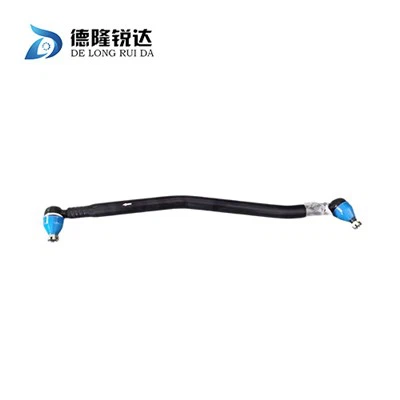 Steering Drag Link AssemblyModel number:. Place of Origin: Xi'an, Shaanxi. Product nature: original brand new parts. Product features: 1. Transmit steering motion 2. Connect wheels 3. End connection 4. Adjustment design 5.Add to Inquiry
 -
 Truck Tie Rod AssemblyModel number:. Place of Origin: Xi'an, Shaanxi. Product nature: original brand new parts. Product Features: 1. Steering transmission 2. Connecting wheels 3. End connections 4. Materials 5. AdjustmentAdd to Inquiry
 -
 Heavy Duty Steering PumpsModel number:. Place of Origin: Xi'an, Shaanxi. Product nature: original brand new parts. Product features: 1. Hydraulic power assist 2. Driving method 3. Adjustability 4. High efficiency5. CompactAdd to Inquiry


- Tel: +8618966763362
- WhatsApp: +8618966763362
- Email: sales@dlrd-truckparts.com
- Add: No.191, Group 2, Panluo Village, Xinzhu Street Office, International Port Area, Xi'an City, Shaanxi Province, China.
Why Choose Us
24H online service
You can contact us to inquire about pre-sales, sales, and after-sales services, and we will give you a very satisfactoryWe are at your service online 24 hours a day.
Rich experience
Dedicated to strict quality control and attentive customer service, our experienced staff is always available to discuss your requirements and ensure complete customer satisfaction.
High quality
Our products are manufactured or executed to very high standards, using the finest materials and manufacturing processes.
One-stop solution
With rich experience and one-to-one service,we can help you choose products and answer technical questions.
Types of Truck Steering System
Rack and pinion steering system is a type of steering system used in automobiles that convert the rotational motion of the steering wheel into linear motion to steer the wheels of the car. This system consists of a rack, which is a flat, toothed bar that is connected to the wheels and a pinion, which is a small gear that connects to the steering wheel. As the steering wheel rotates, the pinion gear rotates and moves the rack left or right, which in turn steers the wheels. Rack and pinion steering system is known for its responsive, precise.
The power steering system is a mechanism in truck that helps drivers steer their vehicles more easily and efficiently by using hydraulic or electric power to assist in the steering process. It comprises various components, including a power steering pump, fluid, hoses, and a power steering unit. When a driver turns the steering wheel, the power steering system uses hydraulic pressure or electric power to amplify the driver's effort, making it easier to turn the wheels and maneuver the vehicle. This helps reduce driver fatigue and provides greater control over the vehicle's direction and movement.
The recirculating ball steering system is a mechanical system used in truck as a means of steering and controlling the direction of the vehicle. It is made up of a series of interconnected ball bearings that transmit the rotational force from the steering wheel to the wheels of the vehicle. As the driver turns the steering wheel, the rotational force is transmitted to a threaded rod that is connected to a gear mechanism. The gear mechanism in turn meshes with a series of ball bearings, which recirculate and transmit the forces to the pitman arm that is attached to the wheels. This system is known for its durability, ease of operation, and reliability, making it a popular choice in many vehicles today.
Hydraulic power steering system is a type of power steering system that uses hydraulic fluid to assist in the steering of a vehicle. The system includes a hydraulic pump that is powered by the engine, which sends high-pressure fluid to a hydraulic cylinder or rack-and-pinion assembly that is attached to the steering linkage. As the driver turns the steering wheel, the hydraulic fluid helps to move the wheels more easily and smoothly, providing a safer and more comfortable driving experience. The hydraulic power steering system is most commonly found in older vehicles, while newer cars often use an electronic power steering system that uses an electric motor to assist steering.
Truck steering systems work by using the motion of the driver’s hands on the steering wheel to control the direction of the wheels. There are two basic types of truck steering systems: manual and power-assisted.
Manual steering systems use a system of gears and mechanical linkages to move the wheels based on the angle of the steering wheel. The driver uses their arms and hands to turn the wheel, which is connected to a worm gear, and a Pitman arm that moves the wheels. This type of system requires more effort to turn the wheels and is generally less common in modern trucks.
Power-assisted steering systems use hydraulic or electric power to assist the driver in turning the wheels. This type of system makes it easier to turn the wheels and is commonly found in modern trucks. Hydraulic power steering systems use a hydraulic pump to create pressure in the steering system, while electric power steering systems use an electric motor to provide assistance.
The power-assisted system works by detecting the position and motion of the steering wheel and automatically adjusting the power supply to the system accordingly. With electric power steering systems, this is done with sensors and a computer processor, while hydraulic systems use pressure-sensing valves.
Material of Truck Steering System
Cast iron
Cast iron is one of the common truck steering materials and is widely used because of its excellent wear resistance and high durability. Steering parts made of cast iron are usually not prone to distortion and deformation, and can maintain stable performance over a long period of use. In addition, cast iron has high corrosion resistance and reliable mechanical properties, so it is often used in truck manufacturing.


Carbon steel
Carbon steel is another major truck steering material. Its manufacturing cost is low, its structure is relatively simple and it is easy to process. Carbon steel steering parts have high strength and hardness and can withstand high loads and severe vibrations, so they are widely used in the manufacture of trucks.
Stainless steel
Stainless steel is often an alternative to mild steel in truck steering components. They have higher corrosion resistance, better hardness, and higher wear resistance, but are correspondingly more expensive to manufacture. Stainless steel steering parts are often chosen on trucks that require higher reliability and longer service life.
Titanium alloy
Titanium alloy material has excellent strength and hardness, making it very suitable for truck steering under extreme working conditions. The manufacturing cost of titanium alloy materials is relatively high, but its lightweight properties can effectively reduce the total weight of the truck, thereby reducing fuel consumption.

Craftsmanship Truck Steering System
The craftsmanship of a truck steering system is critical for reliability and safety while driving. The steering system is responsible for transmitting the driver’s input to the wheels, directing the vehicle where it needs to go. Several components work together to make sure that steering is smooth and responsive.
The most critical part of the steering system is the steering gear or steering box. It is the mechanism that turns the wheels from left to right and vice versa. The gearbox consists of gears, bearings, and shafts that transmit the torque from the steering wheel to the pitman arm.
The other components of the truck steering system include the power steering pump, steering column, tie rods, drag link, and steering knuckles. All these components work together to ensure that the vehicle responds well to the driver's input.
Craftsmanship in truck steering system involves precise alignment and machining of every component to fit perfectly. The components should be durable and built to withstand the truck's weight and the forces generated while driving on various terrains. Each component should also be able to handle the truck’s load and provide excellent functionality under different conditions.
In conclusion, a well-crafted truck steering system is essential for safe and reliable transportation. It involves precision manufacturing, quality materials, and perfect fitting of all components to ensure that the system works optimally.
How Truck Steering System Affect the Rack and Pinion
The truck steering system directly affects the rack and pinion as it is an integral part of it. The rack and pinion steering system is a simple mechanism that translates rotary motion into linear motion. The pinion gear attaches to the steering column, which transmits the rotational motion to the rack gear.
The steering system in a truck typically comprises a steering wheel, a power steering pump, a power steering fluid reservoir, steering linkage, and the rack and pinion. When the driver turns the steering wheel, the power steering pump pumps fluid into the hydraulic system, which causes pressure to build up and assists in steering the truck.
The rack gear is a linear gear, which moves in a straight line along its axis. The tie rods are attached to each end of the rack gear, and they transmit the motion to the wheels. The rack and pinion steering system is highly responsive and accurate, and it provides excellent handling and steering control.
However, a malfunction in the truck steering system can cause damage to the rack and pinion. Problems like a worn-out bushing, damaged tie rod, or a broken link can cause the rack and pinion to malfunction, negatively impacting the handling and safety of the vehicle.
If there is an issue with the steering system, such as leaks or damaged parts, it can affect the rack and pinion's performance, leading to difficulty steering, loss of control, and other issues. Therefore, regular maintenance of the steering system, including checking the power steering fluid level, inspecting hoses and connections, and replacing worn or damaged components, can help ensure proper functioning of the rack and pinion, and overall safe operation of the truck.

Components of Truck Steering System
Steering wheel
The steering wheel is one of the core components of the truck steering system. The driver controls the direction of the truck through the steering wheel. The steering wheel and the steering gear are connected through the steering column, so that the rotation of the steering wheel can be transmitted to the steering gear.
Steering gear
The steering gear is another core component of the truck steering system. It converts the rotation of the steering wheel into the rotation of the truck steering wheel and tires. Steering gear usually consists of gears, clutches, hydraulic cylinders and other components.
Hydraulic system
The hydraulic system is one of the important components in the truck steering system. It produces the steering effect by transferring fluid among components such as the steering gear and hydraulic cylinder. Hydraulic systems usually include hydraulic pumps, oil tanks, oil pipes, pressure regulators and other components.
Suspension system
The suspension system is another important component in a truck's steering system that supports the weight of the truck and keeps the tires in contact with the ground. The suspension system usually includes suspension arms, shock absorbers, springs and other components.
Steering angle sensor
The steering angle sensor is one of the sensor components in the truck steering system. It can sense the steering angle of the wheels and transmit the information to the vehicle's control system. The accuracy of the steering angle sensor is very important to ensure the stability and safety of the vehicle.
How to Maintain Truck Steering System
Regularly inspect the steering system
Take the time to inspect the steering system regularly to identify any signs of wear and tear, such as loose bolts, worn components, or cracked hoses.
Check the steering fluid level
Ensure that the steering fluid level is always full. Low steering fluid level may cause the steering to become stiff and can even result in damage to the power steering pump.
Check the power steering belt tension
Ensure that the power steering belt is tight and not cracked or worn, as a loose or worn belt may cause the wheels to lose the assistance of the power steering system.
Align the wheels regularly
A proper wheel alignment will ensure that the truck's steering remains in good order. It will also prolong the life of the suspension and steering components.
Replace the steering fluid
Flushing old and contaminated steering fluid from the system is necessary to keep it functioning optimally. The replacement of the steering fluid depends on the make and model of the truck, so always check the manufacturer's recommended maintenance schedule.
Look out for unusual sounds
Listen for any unusual sounds like squealing, groaning, or whining when turning the wheel. These sounds may be an indicator of problems in the power steering system, which may require immediate attention.
Replace worn parts
Replace worn or damaged parts immediately to prevent any further damage to the steering system, and always use quality parts.
Keep the tires in good condition
The tires' condition significantly affects the steering system. Check the tire pressure and ensure that the tires are rotated regularly to prevent uneven wear. Uneven wear can cause misalignment or even a blow-out on the road, which can ultimately damage the steering system.
FAQ
Q: What steering system do trucks use?
Q: What is the steering mechanism in a truck?
Q: What are the 3 types of steering?
Q: What is a truck steering system?
Q: How does a truck steering system work?
Q: What are the different types of truck steering systems?
Q: How often should the truck steering system be checked or serviced?
Q: What are some common problems with truck steering systems?
Q: What does a steering system do in a truck?
Q: What causes steering problems in a truck?
Q: Can I drive my truck with a faulty steering system?
Q: What are the main components of a truck steering system?
Q: How can I prolong the life of my steering system?
Q: What should I do if my steering system fails?
Q: What kind of steering does my truck have?
Q: What is steering column in truck?
Q: Do trucks have power steering?
Q: What is the difference between a steering wheel and a steering column?
Q: How is power steering different?
Q: What is the difference between manual and power steering system?
As one of the leading truck steering system manufacturers and suppliers in China, we warmly welcome you to wholesale high-grade truck steering system for sale here from our factory. Contact us for free sample.
Commercial Truck Steering Knuckles, Truck Parts Gear Shift Lever Repair Kit, Truck Telescopic Drive Shaft